
Most people know that smoking and drinking are not great for overall health. But the damage they cause inside your mouth, quietly over months and years, is something far fewer people think about until it is too late.
Your teeth and gums are often the first place these habits leave their mark. And the changes are not just cosmetic. From stubborn stains to tooth loss and oral cancer, the oral health consequences of tobacco and alcohol use are serious, well-documented, and frequently underestimated.
This article breaks down exactly what happens to your teeth when you smoke or drink regularly, and what you can actually do about it.
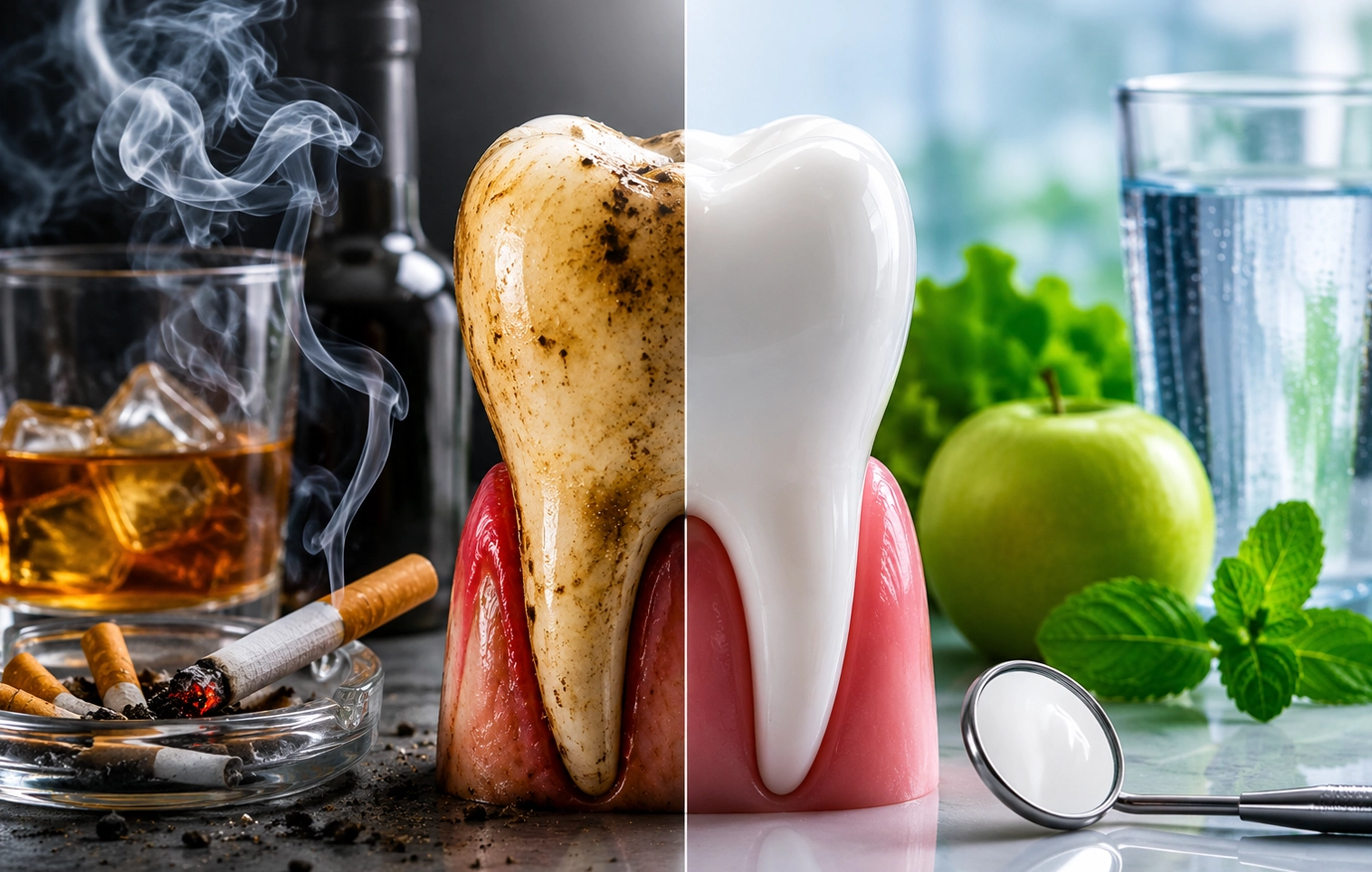
-
What Smoking Does to Your Teeth and Gums
Cigarettes, cigars, pipes, and even smokeless tobacco all compromise your oral health, just in slightly different ways. Here is what is happening beneath the surface.
Tooth Discoloration and Staining
This is the most visible effect of smoking on teeth. Nicotine and tar from tobacco are intensely pigmented compounds. They do not just sit on the surface; they penetrate the outer layer of enamel and seep into the microscopic pores of your teeth.
Over time, this creates a yellow, brown, or gray discoloration that regular brushing cannot reverse. Professional whitening helps, but it is a temporary fix for an ongoing problem if the habit continues.
The deeper issue: As smoking wears down enamel, teeth become more porous, which means future staining happens faster and goes deeper.
Gum Disease (Periodontal Disease)
Smokers are two to three times more likely to develop gum disease than non-smokers. That is not a minor risk; it is one of the most significant lifestyle risk factors in dentistry.
Tobacco smoke disrupts the normal balance of bacteria in your mouth and reduces blood flow to the gums. This weakens the immune response in gum tissue, making it harder for your body to fight off infection.
What makes this especially tricky is that smoking can mask the classic signs of gum disease. Because blood flow is restricted, smokers often do not experience the typical bleeding that most people associate with early gum disease. The disease progresses silently.
By the time it becomes obvious, with loose teeth, receding gums, or chronic bad breath, significant damage may already be done.
Bone Loss Around Teeth
Periodontal disease does not stop at the gums. As the infection advances, it attacks the bone that holds your teeth in place. Smokers experience faster and more severe bone loss than non-smokers with the same level of infection.
Once bone is lost, it does not grow back on its own. This is one of the leading reasons smokers have higher rates of tooth loss compared to non-smokers.
Dry Mouth
Tobacco reduces saliva production. That might sound minor, but saliva is your mouth's primary defense system. It neutralizes acids, washes away food debris, carries minerals that help remineralize enamel, and keeps bacteria in check.
When saliva is reduced, the oral environment becomes more acidic and bacteria-friendly, which accelerates tooth decay and gum disease.
Slowed Healing After Dental Procedures
If you have had a tooth extracted, dental implant placed, or gum surgery performed, smoking dramatically slows healing. The reduced blood flow and compromised immune response mean infection risk is higher and recovery takes longer.
This is why dentists strongly advise patients to stop smoking before and after any oral surgical procedure. Smoking after a tooth extraction, for instance, significantly increases the risk of a painful condition called dry socket.
Oral Cancer
This is the most serious consequence of all.
Tobacco, in all forms, is one of the leading causes of oral cancer. This includes cancer of the lips, tongue, cheeks, floor of the mouth, and throat. Smokers are six times more likely to develop oral cancer than non-smokers.
Oral cancer is often detected late because it is not always painful in its early stages. By the time symptoms appear, the disease may have already spread.
Regular dental check-ups are critical for early detection, as dentists routinely screen for suspicious lesions during exams.
-
What Alcohol Does to Your Teeth and Gums
Alcohol's effects on oral health are often less talked about than smoking's, but they are just as real. When combined with tobacco use, the risks multiply significantly.
Enamel Erosion
Most alcoholic beverages are highly acidic. Wine, beer, ciders, and mixed cocktails all have pH levels well below the threshold at which tooth enamel begins to dissolve, around pH 5.5.
Frequent exposure to these acids weakens enamel over time. Teeth become thinner, more sensitive, and more susceptible to decay. They may also take on a translucent appearance at the edges, a hallmark sign of acid erosion.
Wine is especially aggressive. Red wine is highly acidic and also contains dark pigments called tannins that stain teeth. White wine, while less pigmented, is often even more acidic.
Dry Mouth
Like tobacco, alcohol suppresses saliva production. Alcohol is a diuretic, which means it promotes fluid loss throughout the body, including in your mouth.
A dry mouth after a night of drinking is not just uncomfortable. It is an environment where bacteria thrive and cavity-causing acids are not being neutralized. This is part of why people who drink heavily have higher rates of tooth decay.
Tooth Staining
Red wine, dark beers, and spirits mixed with cola or coffee all stain teeth. The tannins in wine act almost like a stain-setting agent, opening up the surface of enamel and allowing pigments to bind more deeply.
Brushing immediately after drinking wine can actually make this worse, as softened enamel is more vulnerable to abrasion. Dentists recommend waiting at least 30 minutes before brushing, and rinsing with water in the meantime.
Sugar and Fermentable Carbohydrates
Many alcoholic drinks are high in sugar. Cocktails, liqueurs, flavored beers, and sweet wines all feed the bacteria responsible for tooth decay. These bacteria produce acids as a byproduct, which eat away at enamel and create cavities.
Increased Risk of Oral Cancer
Heavy alcohol consumption is independently linked to a higher risk of oral cancer. But the real concern is the interaction between tobacco and alcohol.
When used together, smoking and heavy drinking create a synergistic effect, meaning the combined risk is significantly greater than the sum of each individual risk. Research suggests the combination of heavy smoking and drinking raises oral cancer risk by up to 30 times compared to people who neither smoke nor drink.
Gum Disease
Alcohol impairs immune function. Over time, heavy drinking weakens the body's ability to fight off bacterial infections, including the kind that cause gum disease. Chronic alcohol use is associated with more severe periodontal disease and slower healing after dental treatment.
-
How Smoking and Alcohol Damage Teeth Together
When someone both smokes and drinks regularly, the effects do not just add up; they amplify each other.
- Alcohol dries out the mouth, concentrating the harmful chemicals from tobacco
- Tobacco's carcinogens are dissolved more readily in alcohol and absorbed more easily through oral tissues
- Both habits suppress immune function, leaving gums and oral tissues vulnerable
- The combination significantly elevates the risk of oral cancer, gum disease, and tooth loss
For dentists, patients who smoke and drink heavily are among the highest-risk individuals for serious oral health complications.
-
Signs Your Teeth May Already Be Affected
It is worth knowing what to look for. Talk to your dentist if you notice any of the following:
- Yellowing or browning of teeth that does not improve with regular brushing
- Bleeding gums, especially when brushing or flossing; smokers may not experience this even with active gum disease
- Receding gums or teeth that appear longer than they used to
- Persistent bad breath that does not go away with brushing or mouthwash
- Tooth sensitivity, particularly to hot, cold, or sweet foods
- Loose teeth or changes in how your bite feels
- White or red patches in the mouth, on the tongue, or on the gums, which should be evaluated urgently
- Mouth sores that do not heal within two weeks
-
What You Can Do to Protect Your Oral Health
You do not have to quit overnight, but reducing your exposure to tobacco and alcohol is the single most effective thing you can do for your oral health if you use either regularly.
Quit or Cut Down on Smoking
The oral health benefits of quitting smoking begin almost immediately. Within weeks, gum tissue starts to heal. Over months and years, the risk of gum disease, tooth loss, and oral cancer drops significantly, though it takes several years to approach the risk level of someone who never smoked.
Your dentist or GP can help with cessation support, including nicotine replacement therapy and prescription medications.
Drink Water Alongside Alcohol
Keeping water nearby when drinking alcohol helps rinse away acids and sugars, and counteracts some of the dehydrating effects. Sparkling water between alcoholic drinks is a particularly effective strategy.
Wait Before Brushing
After drinking acidic beverages, wait 30 to 60 minutes before brushing. The acid temporarily softens enamel, and brushing too soon can cause abrasion. Rinse with plain water immediately after drinking to neutralize acids.
Use Fluoride Toothpaste
Fluoride helps remineralize enamel and strengthens teeth against acid erosion. If you smoke or drink regularly, using a fluoride toothpaste twice daily is non-negotiable. A fluoride mouthwash can provide additional protection.
Stay Hydrated
Drink plenty of water throughout the day to combat dry mouth from both tobacco and alcohol. Sugar-free chewing gum stimulates saliva production and can help between meals.
See Your Dentist Regularly
This one is critical. Smokers and heavy drinkers should see a dentist at least twice a year, ideally more frequently. Regular professional cleanings remove stain and tartar that accumulates faster in these patients. Regular check-ups also allow early detection of gum disease, decay, and oral cancer.
Do not avoid the dentist because you are worried about being judged. Dentists are healthcare professionals focused on your health, not your habits.
Why Choose Odent Dental Care in Perungudi?
Not all dental clinics approach oral health the same way. At Odent Dental Care, Perungudi, the focus is on preventive care and long-term oral health, not just treating problems after they have taken hold.
If smoking or alcohol has already affected your teeth, gums, or oral tissues, the team at Odent provides personalized, evidence-based treatment designed to restore what has been damaged and protect what remains. Whether you are dealing with surface staining, early gum disease, or simply want a thorough check-up after years of heavy tobacco or alcohol use, Odent's approach is thorough, non-judgmental, and built around your individual needs.
What Odent Dental Care Offers
- Professional teeth cleaning and stain removal - Deep cleaning treatments that remove built-up tartar, nicotine stains, and surface discoloration that regular brushing cannot address
- Gum disease treatment - From early-stage gingivitis to more advanced periodontal disease, Odent provides scaling, root planing, and ongoing management to stop the progression
- Oral cancer screenings - Routine visual and physical screenings as part of every check-up, with prompt referral if anything requires further evaluation
- Teeth whitening and cosmetic dentistry - Safe, professionally supervised whitening treatments to reverse staining, along with a full range of cosmetic solutions for smile restoration
- Preventive dental care and regular check-ups - Scheduled care plans designed to catch problems early, before they become expensive and painful
If you are searching for the best dentist in Perungudi or a trusted dental clinic near you, Odent Dental Care combines clinical expertise with genuine care for your long-term well-being, not just your next appointment.
Final Thoughts
Smoking and alcohol do not just affect your overall health. They quietly work on your teeth, gums, and oral tissues every day, often without obvious warning signs until real damage is already done. From stubborn stains and persistent bad breath to gum disease, bone loss, and oral cancer, the effects are wide-ranging and cumulative.
But here is what matters most: many of these problems can be prevented, managed, or treated effectively when they are caught early. The window to act is almost always wider than people realize, but it does not stay open forever.
The smartest thing you can do right now, whether you smoke or drink occasionally or heavily, is to get a proper oral health assessment from a dentist who knows what to look for.
Protect your smile and your health. Book your appointment at Odent Dental Care, Perungudi today for a complete oral health check-up and take the first step toward a healthier, more confident smile.
This article is intended for informational purposes only and does not constitute medical or dental advice. Always consult a qualified dental professional for personal guidance.
Frequently Asked Questions
Does vaping damage teeth like smoking does?
Vaping is not harmless for oral health. E-cigarettes still contain nicotine, which reduces blood flow to the gums and increases the risk of gum disease. The aerosol from vaping can also dry out mouth tissues and alter the oral microbiome. While the research on vaping-specific oral health effects is still developing, evidence increasingly shows it carries real risks, distinct from but not necessarily less concerning than traditional cigarettes.
Can I reverse staining from smoking and alcohol?
Surface staining can often be reduced with professional whitening treatments. However, deep enamel staining may be permanent or require more intensive cosmetic treatments. More importantly, whitening does not address the underlying damage to gums or bone.
Does red wine actually clean your teeth?
No. This is a persistent myth. Some compounds in red wine have antibacterial properties in lab settings, but drinking red wine does not clean teeth. The acid, sugar, and tannins far outweigh any potential antibacterial benefit, and regular consumption is associated with higher rates of enamel erosion and staining.
How long after quitting smoking do teeth improve?
Gum tissue begins to recover within weeks of quitting. Over 6 to 12 months, many patients see meaningful improvement in gum health. The risk of serious conditions like oral cancer continues to decline for years after quitting. Some staining may remain and require professional treatment, but the overall trajectory is clearly positive.
Is wine worse for teeth than beer?
Both are harmful, but wine, particularly white wine, tends to be more acidic, making it more erosive for enamel. Red wine combines high acidity with strong pigments and tannins, making it both erosive and highly staining. Beer is generally less acidic than wine but still contributes to decay through sugar content.
